




Not so long ago, wellness was largely centered around how hardcore our exercise routines were. A new Barry’s class to try, a 5am ritual to master, or a CrossFit competition that pushed us to our limits. If we were sweating, if we smashed our step count, and if we burned all the calories, we were doing something right. Today, however, the conversation is shifting, with recovery emerging as one of the most important pieces of the wellness puzzle, as more women recognize that supporting the body after exercise is every bit as valuable as the workout itself. “The science has finally caught up with the suffering,” says Danielle Santos, head coach at Sharjah’s Altitude Ladies Gym. “The ‘no pain, no gain’ era was built on the idea that more is always better—more volume, more intensity, more hours—but what we now understand is that adaptation doesn’t happen during training; it happens during recovery. The training session is the stimulus. Sleep, nutrition, and rest are where your body actually rebuilds stronger.”
Recovery is particularly important for women because our bodies respond differently to men’s when it comes to training, stress, and muscle fatigue, all of which are fundamentally shaped by our hormonal cycles. “The mainstream fitness industry was built largely on research conducted on men, and that bias is still embedded in how most programs are designed today,” explains Santos. There are certain phases of our menstrual cycle where we build muscle significantly more easily, particularly during the follicular phase, which begins on the first day of menstruation and lasts roughly two weeks. During this time, estrogen rises and increases strength output, raises tolerance to exertion, and protects muscle tissue from excessive damage. “Your body is literally primed to be pushed,” she explains. Then comes the luteal phase, from ovulation to the end of the cycle, when progesterone rises, recovery slows, injury risk increases, and energy drops. “This is precisely the phase where most women try to maintain the same training intensity and fail—not because of a lack of willpower, but because the hormonal environment simply doesn’t support it.”
So, what exactly should we be doing about it? While more intense training can be done during the follicular phase, recovery should be prioritized during the luteal phase. As to be expected, sleep is a non-negotiable foundation—”It is during deep sleep that cortisol drops, growth hormone release peaks, and tissue repair accelerates,” explains Jamie Moore, global director of fitness at SIRO Hotels. Close behind are nutrition, hydration, adequate protein intake, mobility work, and stress regulation. Then there are the new-world experiences that can be added into your routine, including cold plunges, infrared saunas, compression therapy, and cryotherapy, all of which can be extremely effective when used strategically. “Infrared saunas are excellent for circulation, parasympathetic activation, and sleep quality, particularly when used in the evening,” adds Santos. As for Moore, he believes walking is still one of the most underrated tools we have—”it supports lymphatic flow, improves blood glucose regulation, reduces stress, and helps the nervous system downshift without adding load to the body,” he explains.
This growing awareness of recovery has led to a wave of new wearables that help us better understand how our bodies are coping with training, using movement and heart-rate data to signal when we might need more rest. Case in point? Devices like WHOOP and Oura rings now take pride of place in the most stylish of wardrobes. They have the added benefit of helping women track correlations between their cycle phases and recovery metrics. “That said, wearables are tools, not oracles,” notes Santos. “The risk is that people become so focused on the data that they lose the ability to listen to their body. I use them as a second opinion, not a first one. If your HRV looks fine but you feel terrible, trust your body.” And that’s what the whole conversation comes down to—trusting your body. If you’re feeling particularly fatigued, experiencing disrupted sleep, have a lack of motivation, or are becoming increasingly irritable, chances are you’re not giving recovery the attention it deserves. “Some women may also notice changes in cycle regularity, increased sensitivity to stress, or a feeling of heaviness in workouts that previously felt manageable,” says Moore. “The body is constantly providing feedback, and recovery is about responding to that feedback early, not after burnout has set in.” Because sometimes progress doesn’t look like another workout, an earlier alarm, or a tougher challenge. Sometimes, it looks like an extra hour of sleep, a slower day, and the confidence to trust that your body knows exactly what it needs. And maybe an ice plunge thrown in for good measure.
THE BEST PLACES TO RECOVER IN DUBAI
From state-of-the-art wellness labs to tranquil regeneration spaces, these are the city’s top spots for recharging mind and body
SIRO One Za’abeel
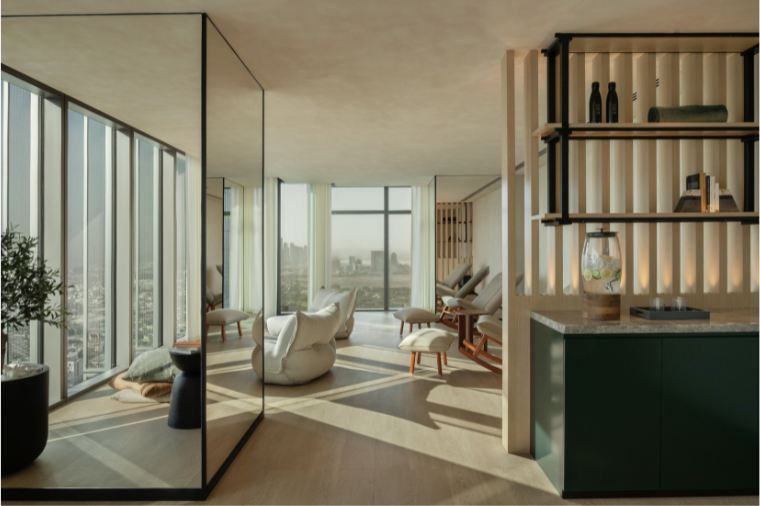
Siro has a whole space dedicated to recovery—aptly named the Recovery Lab—which offers everything from invigorating cold plunges to assisted stretching and cutting-edge treatments like dry needling and cryotherapy. Also worth taking advantage of is the Zen Room, which is the perfect place to read, journal, or even have a quick snooze. @siroonezaabeel
View this post on Instagram
The Bay Health Club
Set within the lush surroundings of Al Barari, The Bay Health Club is home to a ladies-only space that is dedicated to recovery. Expect the likes of a Rollstar machine for lymphatic drainage, Normatec air compression boots, a red-light therapy room, a sauna, cold plunge facilities, and a pool for some gentle laps. Guest passes available. @bayhealthclub
View this post on Instagram
Akari
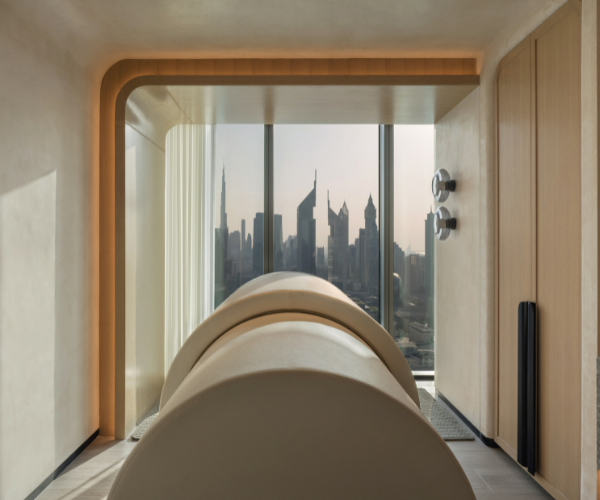
Guided by the principle that wellness should feel both effortless and transformative, Akari is a new rejuvenation space in the heart of Dubai’s One Central. Not only does it offer red light therapy and compression boot therapy, but guests can also try out IHHT (Intermittent Hypoxia Hyperoxia Training) in one of its meditation pods, which involves breathing in alternating levels of oxygen for deep regeneration, all while you drift into a state of quiet calm. @akariwellness
View this post on Instagram
– For more on luxury lifestyle, news, fashion and beauty, follow Emirates Woman on Facebook and Instagram
Images: Supplied & Feature Image: Supplied


