


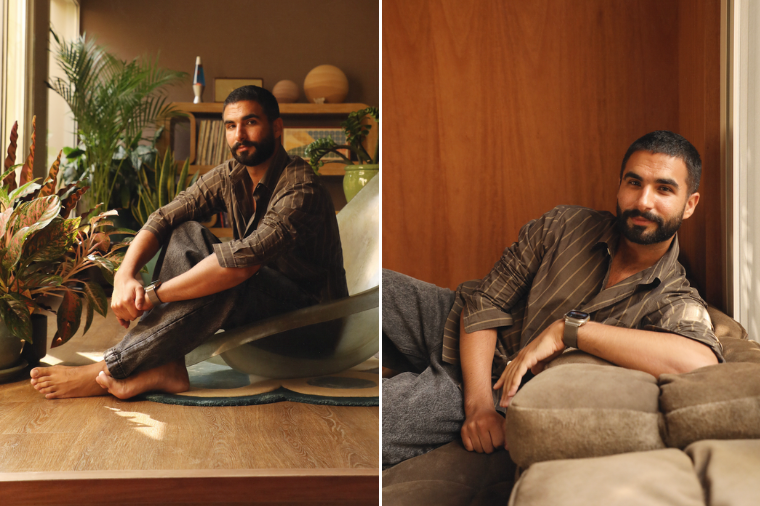
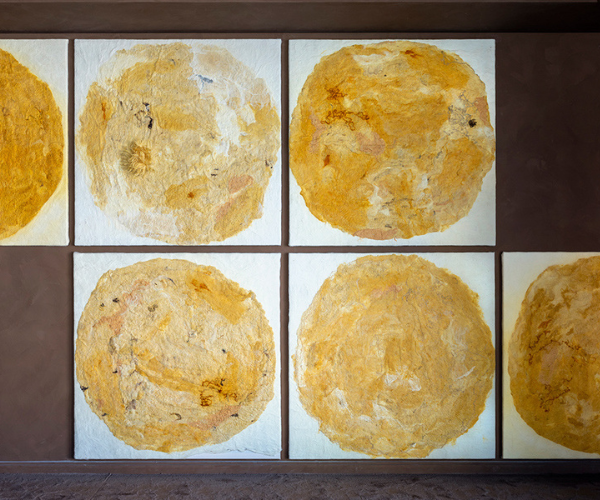
When Omar Al Gurg, founder of furniture studio Modu Method, logs into our video call, my immediate first impression is one of serene contrast. Seated against a backdrop of striking textures while dressed in a crisp white kandora and a warm smile, he possesses a quiet composure that feels both grounding and generous. This initial sense of deep-seated calm is the first thread in understanding a creative who defies easy categorisation. A man who deftly blends the roles of an artist, designer, and businessman with a humility that seems earned – not performative. Behind him, a sundrenched tapestry commands the space. He introduces it as the work of Adrian Pepe, a Honduran-based artist in Lebanon deeply committed to textural narratives. “He uses wool from the Awassi sheep, processes it into felt, and dyes it with red ochre, from the earth – the first pigment known to man,” Al Gurg shares, his explanation an invitation into a world he finds fascinating. A passion for the ‘why’ behind an object, is the throughline of his own creations.
Al Gurg’s current focus shifts between bespoke furniture commissions and playful, personal projects. He’s collaborating with brands like Calico Wallpapers and Stellar Works, crafting their booth for the upcoming Downtown Design event, and quietly preparing to launch a new multi-functional objet for his own label. “We’re planning on launching a mabkhara a modern take. It’s made out of marble and steel, quite industrial, but it looks soft,” he says, his hands gently shaping the form in the air as he describes the versatile object that can serve as a candle holder, incense burner, or even a stand for an espresso cup. “Our product line is very much like, if it’s a chair, why does it have to be just a chair?”
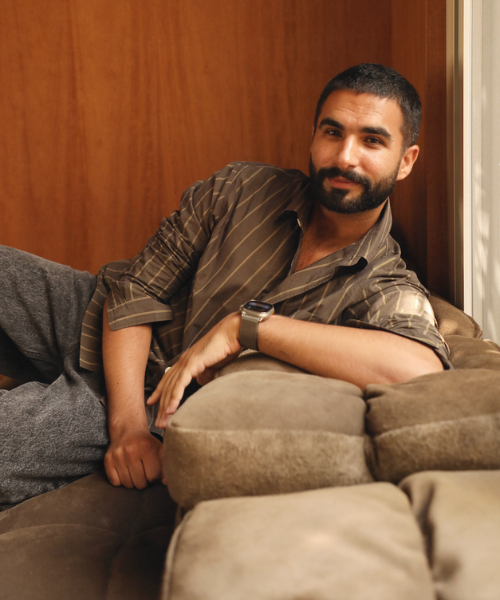
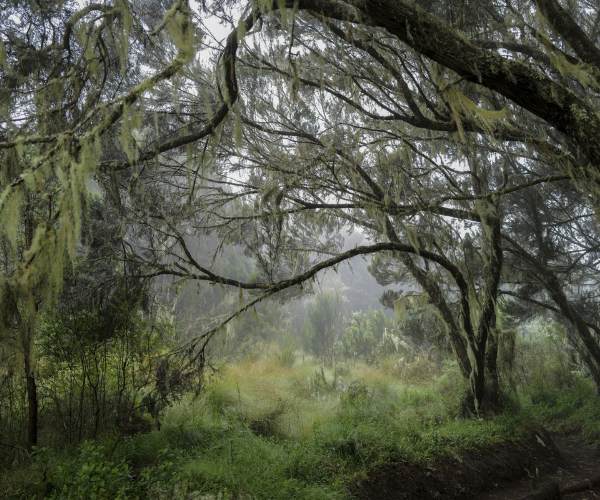
This philosophy of fluid function fuels him, a principle that extends beyond product design and into his photographic work, most notably his celebrated Everyman’s Mountain exhibition at Lawrie Shabibi Gallery. That project was born from a personal pilgrimage, climb ing Kilimanjaro mountain, and a practical problem. “I tried to find visual references,” he recalls. “But I couldn’t find anything apart from tourist photos.” So, with the meticulousness that defines his approach, he took three cameras and documented the arduous ascent himself, a task that fundamentally transformed his perspective. The resulting photographs are powerfully raw, but their profound depth lies in his focus on the people – the porters who make the journey possible. “For a group of seven, we had about 30 porters it takes a village,” he notes, his voice softening with respect. This idea of framing the epic within a humble, human story highlights his creative instinct to celebrate the collective over the individual.
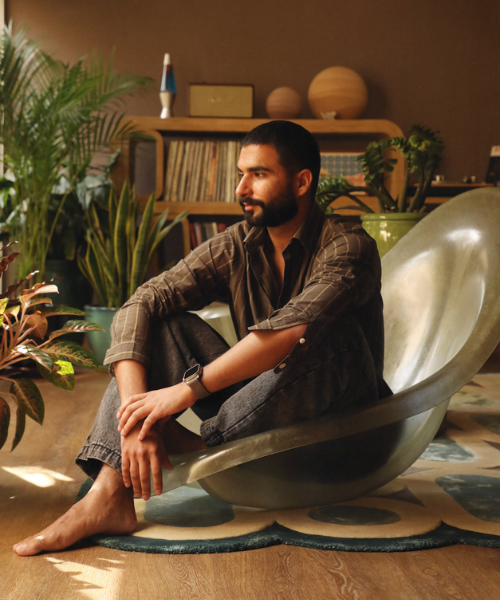
Whether designing a chair or composing a photograph, Al Gurg’s goal is to foster a palpable emotion. “I want it to evoke any kind of feeling, because I want people to think when they are looking at my work,” he says. In an age of endless scrolling, his creations are a deliberate call to pause and engage. This principled perspective also firmly guides his forays into high-profile commercial collaborations with Houses like Vacheron Constantin. He navigates this glamourous world with a clear-eyed view, acutely aware of the tokenisation that sometimes surfaces for Emirati artists. “I do feel tokenised, like a checkbox sometimes” he admits with a disarming directness. But for Al Gurg, every project is a potential partnership, a dialogue where creative conviction and commercial requirements must find a harmonious balance. “It’s a constant conversation that you have to have with people. If you actually have these active conversations with them in good faith, you end up pushing yourself in a way which you now know you’re capable of.”
This level headed outlook extends to how he manages his dual roles. Somehow, he sustains this vibrant creative drive while also leading the design division for his family’s real estate arm, the Easa Saleh Al Gurg Group. For many, this would be a recipe for burnout or a fractured identity, but for Al Gurg, it creates a virtuous cycle. He describes it as a cross-pollination of disciplines; the corporate world instills a sense of diligence and structure that informs his studio, while the creative studio ensures his architectural work remains infused with soul and a human-centric approach. “Whatever I learn from the corporate world, I try to implement in my business, and whatever I learn from my business in the creative world, I try to implement there,” he explains. This ability to synthesize seemingly opposing fields hints at a foundational aspect of his character: he is a perpetual learner.
He dismisses the “self-taught” label with gracious humility. “I don’t think that I’m my own teacher. Everything that I’ve learned, I’ve learned from either somebody else or something else,” he reflects. His inspiration is drawn from a vast and eclectic well – cinematography, music, the pressure of national service, or a quiet moment in nature. “I find my points of reference through the moments where I can learn the most – and then I can turn it into something else.” As the conversation concludes, the pieces of Al Gurg’s character coalesce. The warm smile, the detailed explanations, the principled stands, and the humble acknowledgment of his own journey – they all paint a portrait of an artist driven by a genuine desire to connect. His world is one of thoughtful tangents and tangible connections, where building a bridge between the beauty of a moment and the objects we live with invites us to lean in closer and take the time to experience with intention.
Emirates Man’s The Winter 2025 Issue – Download Now
– For more on how to look smart and live smarter, follow Emirates Man on Facebook and Instagram
Images: Supplied


