



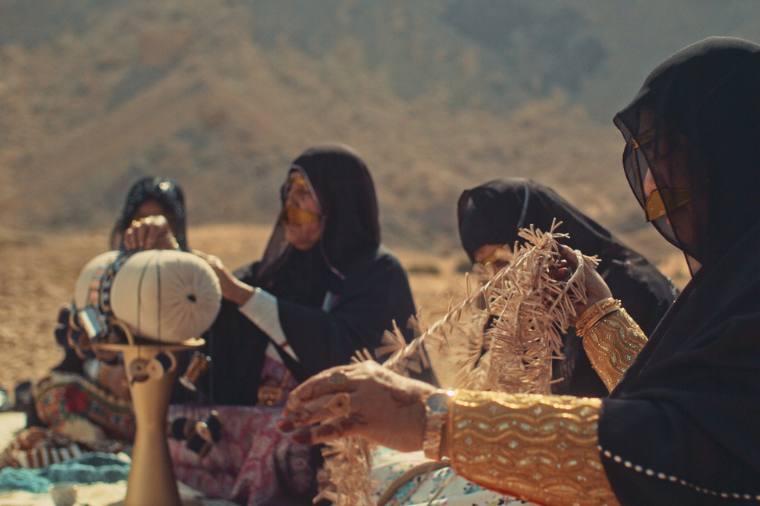
Modest wear, from the abaya and the kaftan to a jalabiya or hijab, is no longer a way of dress that the big brands give a perfunctory nod to during Ramadan. It has become part of the fabric of fashion in a very significant way across the world. Take Uniqlo, which has built a permanent global line with Hana Tajima, or Nike, which put the Pro Hijab on athletes. And there is no denying the numbers: Muslim consumers spent roughly $347 billion on modest fashion in 2024, up 6.2 per cent in a year, with a forecast of $444 billion by 2029, according to the State of the Global Islamic Economy report.
This brings us to an interesting predicament. One of the fastest-growing categories in fashion is also arguably one of the hardest to protect, and the people bearing the brunt of that challenge are mostly the small Gulf labels the market has been built on.
THE GARMENT BELONGS TO EVERYONE
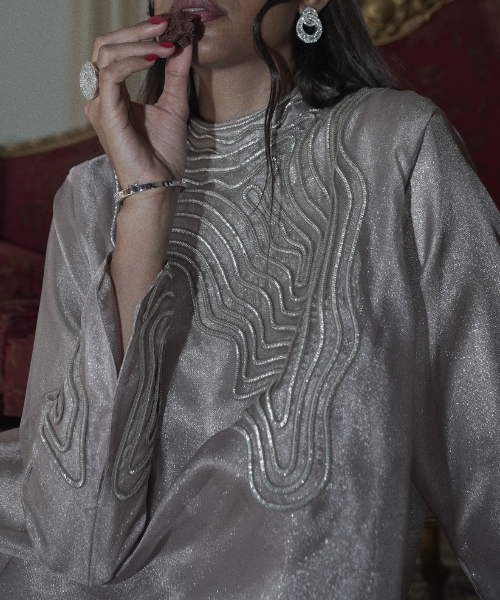
The law is blunt about this, and I think it is right to be. An abaya is a centuries-old silhouette. So are the kaftan, the jalabiya, the hijab, and the shayla. Nobody can own the shape of a garment that has been worn for generations, any more than anyone owns the trench coat or the little black dress. That is not a loophole in the system. It is the system working as intended. Intellectual property protects what is new and distinctive, and the whole beauty of modest fashion is that its foundations are old and shared.
So what does a designer actually own? Much less than most assume, and it is worth being precise about it.
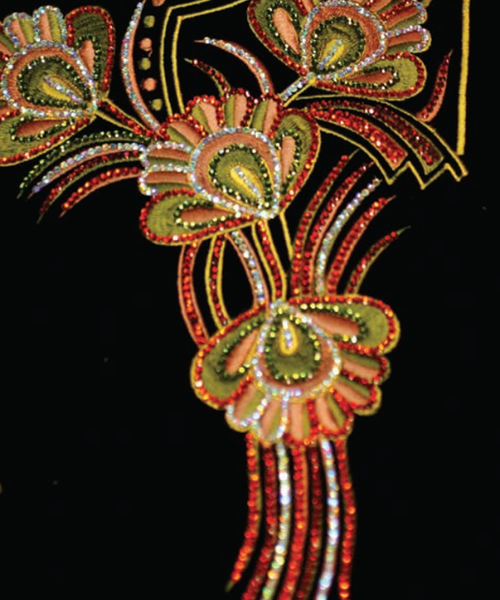
The print or the embroidery on the fabric, because that is original creative work. The brand name and the logo, if registered as a trademark. A distinctive closure, a piece of hardware, a construction detail nobody else has used, if registered as a design. And the specific appearance of a piece, if, and only if, someone files it. Everything else is fair game the week after your launch. Even so, the giants fight over it: Shein and Temu have taken each other to court over copying at industrial scale, which tells you how far up the food chain this issue goes. The platforms are not doing anything to modest fashion they are not doing to the rest of the industry. The difference is that a modest label’s whole identity often lives in one embroidery motif, one sleeve, one way of cutting a front panel. Lose that, and there is nothing left underneath.
THE 12 MONTHS MOST DESIGNERS WASTE
Here is where the UAE has quietly handed its designers something useful, which almost nobody seems to be using. Under Federal Decree Law No. 11 of 2021 on the Regulation and Protection of Industrial Property Rights, a registered industrial design in the UAE is protected for 20 years from the filing date, through the Ministry of Economy. The design has to be new, which sounds impossible for a working label with an Instagram account, except for one provision that changes everything: a 12-month grace period after you first disclose it.
READ THAT AGAIN IN COMMERCIAL TERMS
You can show the collection. Sell it. Watch which three pieces the customer actually reaches for. And then, within a year, register the winners. You do not have to gamble on filing before you know. Examination here is formal rather than substantive, so the process is lighter than most designers fear, and the fee is less than one decent campaign shoot. I have spoken to designers across the region over the last few years. Very few have registered a single design. A worrying number have not registered their trademark outside the UAE, which means whoever files that name first in Riyadh or Doha owns it there. Meanwhile the global houses arrived with their portfolios already filed. Nike protected the Pro Hijab before it ever reached an athlete. It’s true that the paperwork is the least glamorous part of the business, but it is the part that decides who keeps what. One new development is worth acting on. Saudi Arabia joined the Hague System in January 2025, with the Geneva Act in force there from April. For a label in Dubai selling into Saudi, that is a materially cheaper route to design protection across multiple markets from a single application. If Saudi is your second market, and for most modest labels it is, this changes your filing strategy.
WHAT THE REGION CANNOT PROTECT
There is a second gap, a larger one that sadly is nobody’s fault. The heritage that makes Gulf modest fashion distinctive – the talli braiding above all – is cultural heritage rather than private property. UNESCO inscribed Al Talli on its Representative List in 2022: six cotton threads separated by a silver one, made by Emirati women for weddings and Eids. Recognition, though, is not ownership. Anyone anywhere can put “talli” on a garment and sell it, and when a global house borrows something with cultural or religious weight and gets it wrong, the only remedy on offer is public embarrassment. So modest fashion sits between two failures. The individual designer under-protects what they legally could, and the community cannot protect what it collectively makes.
WHAT YOU CAN DO THIS MONTH
If you run a label, or are about to, the list of what needs to be done is short and none of it requires a retainer. File the name and logo as a trademark in the UAE and in every GCC market you sell into, before launch, not after the first copy shows up. Photograph and date every design the day it is finished, because that dated record is your evidence later. Diarise the 12-month window for each collection and register the pieces that sold. Put territory, term, and channel limits into every collaboration and influencer contract; the clause that hands over your work “worldwide, in perpetuity” is the one to strike, every time. And learn the marketplace takedown forms, which move faster than any lawyer will. Nobody owns the abaya, and nobody should. But your abaya, the one with the sleeve you spent a season getting right, can be yours for 20 years. You have 12 months to decide. Most designers let them pass.
October’s—The Celebratory Issue—Download now
– For more on luxury lifestyle, news, fashion, and beauty, follow Emirates Woman on Facebook and Instagram.
Images: Supplied


