



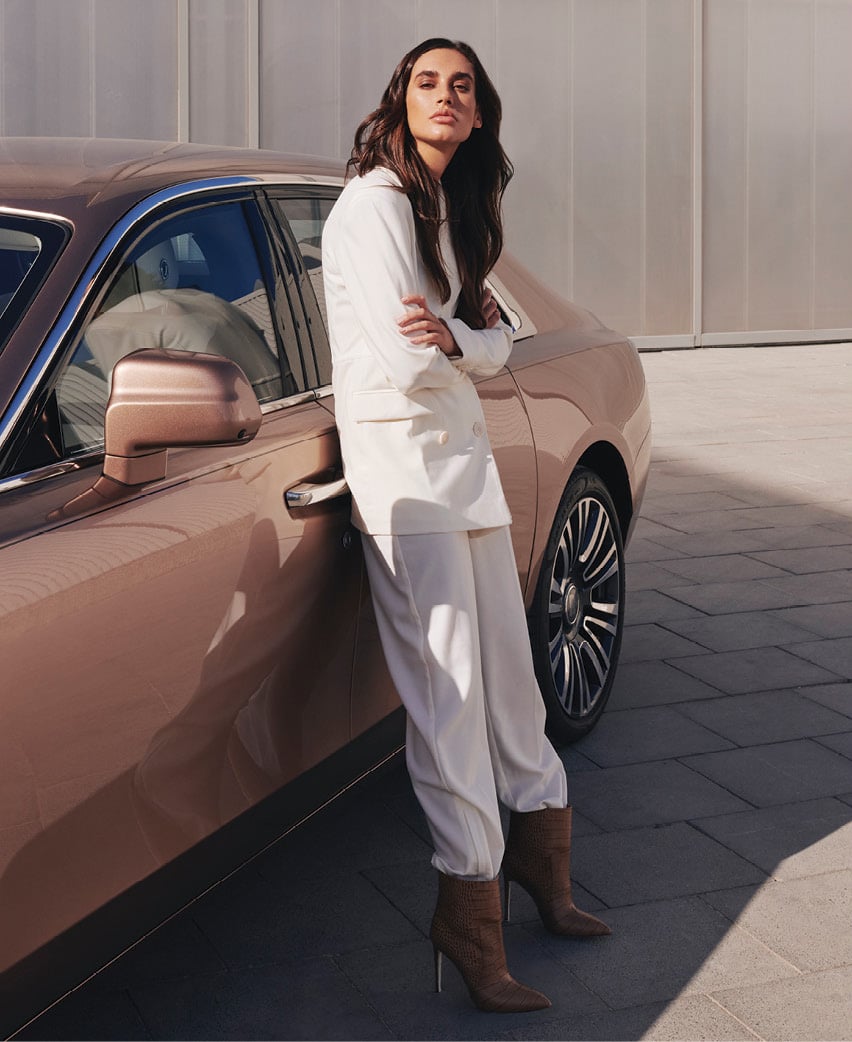
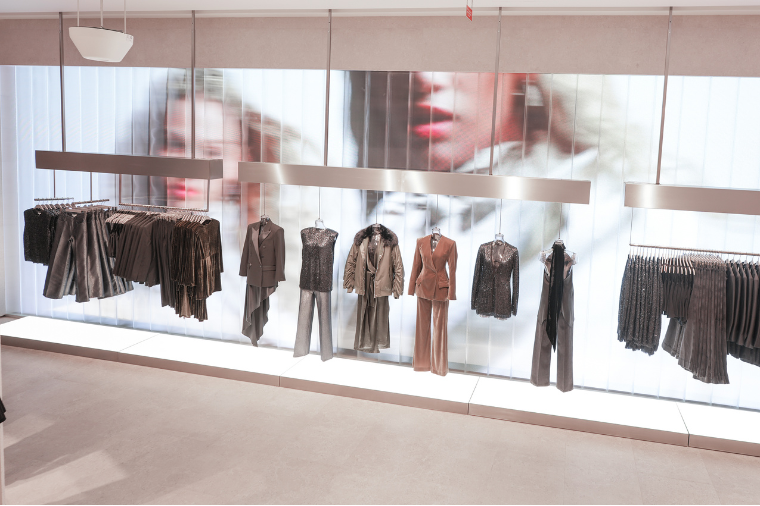
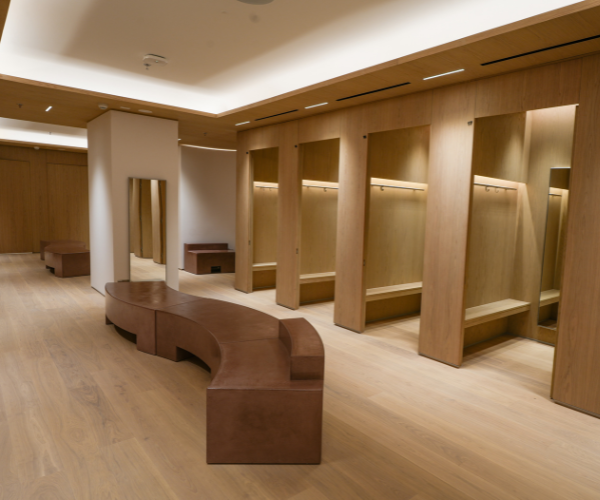
Standing inside H&M’s vast new flagship in the Dubai Mall feels a little like stepping into a well-tuned orchestra, there is a clear flow and sartorial crescendos on each floor, and there are even state-of-the-art dressing rooms that offer up a selection of music and accompanying rhythmic lighting across their 360 degree mirrored interiors. Harmonising it all is a Creative Director intent on bringing every note, every instrument, every local inflection into perfect balance. For Jörgen Andersson, who first opened an H&M store in Dubai nearly twenty years ago, returning now to unveil this next-generation space is more than déjà vu. As he puts it, “It feels amazing. I was actually here 20 years ago… and now coming back… presenting ourselves in the best possible way again feels so good. I’m super excited.”
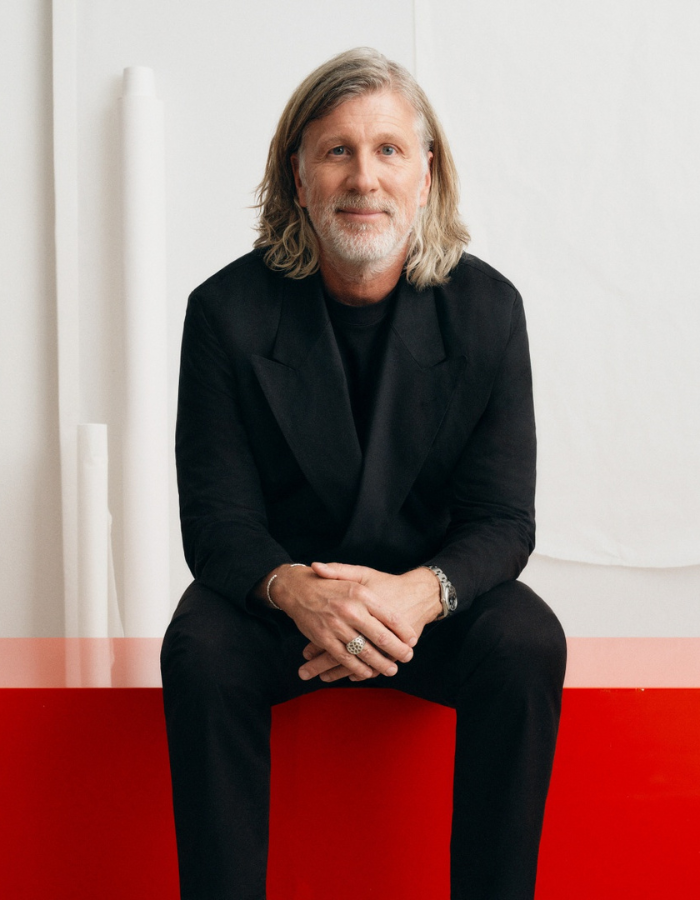
The flagship, with its expansive footprint, curated edits, and experimental retail technologies, marks a pivotal moment for the brand in the Middle East. Dubai has officially been designated a global key city for H&M, a status typically reserved for cultural powerhouses like Paris, London, and New York. But as Andersson points out, the UAE has evolved into something rare: a creative crossroads where influences meet and multiply. “Dubai is kind of growing as some sort of melting pot of everything that is happening in the world. Something new is happening every time I come here,” he explains. “Twenty years ago, it was big, but now it’s massive.”
For Andersson, who began his H&M journey in 1990 as a budget controller before becoming one of the architects behind the company’s now-legendary designer collaborations, that he famously kicked off with Karl Lagerfeld; this flagship is a culmination of decades spent exploring how a democratic fashion brand can evolve without losing its soul. His philosophy has always been about making fashion accessible but never generic, rooted in a belief that H&M must adapt to its surroundings without losing its global rhythm. “The time has passed where global companies can find one recipe and just roll that out,” he says. “People are tired of these global brands that don’t pay attention to being locally relevant.”
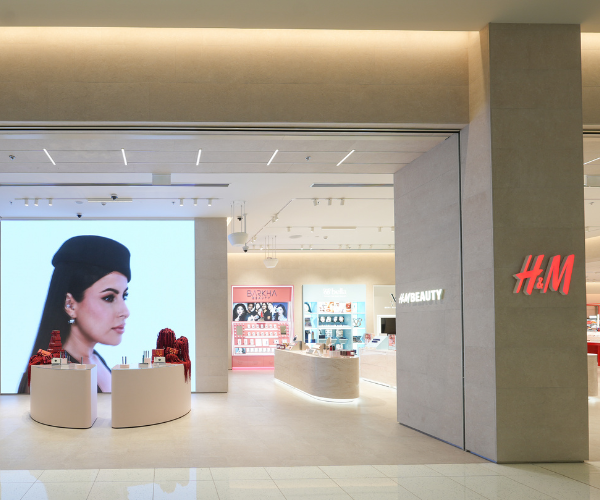
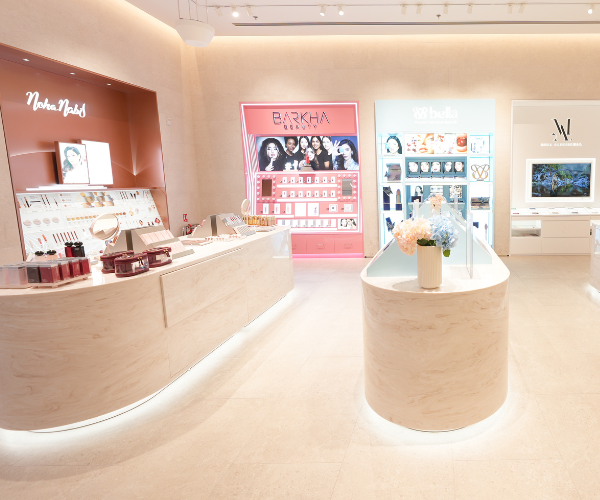
Local relevance has become one of the brand’s most important instruments. Case in point the store’s exclusive beauty collaboration with Mina Shaklee. It’s exactly the kind of regional touchpoint the creative director believes is essential to the brand’s future. “You have to have respect for where you are when you show up,” he notes. “You need to make sure you connect with what will resonate with the local customers.”
This is where music enters the metaphor. When Andersson talks about H&M, he describes it not as a fashion monolith but as a platform, an ever-expanding playlist meant to be remixed by whoever steps into the brand’s world. “We are not like many brands who have a distinct style,” he says. “We’re more like a platform, more like a Spotify, where we can curate different things.”
The Dubai flagship, then, becomes a kind of concert hall, vast, layered, ever evolving and designed for discovery. And in a city built on the interplay of cultures, Andersson finds that H&M’s multivocal approach resonates. “Typically Dubai is the baseline of everything,” he says with a smile. “Everything is just mixed… and I think that as the world evolves much more towards that, which is much more interesting for us.”
What Andersson finds most energising is the way customers now compose their own aesthetic soundtracks. “You can mix a luxury piece with a vintage piece… no one owns the customer anymore,” he explains. “The customer is much more fluid and much more used to creation.” Fashion, for him, is no longer a top-down performance but a crowd-sourced symphony, one that H&M must keep pace with if it hopes to remain culturally relevant.
Part of this means inviting disruption. “It’s inviting people to break our algorithm,” he says. “Fashion is created by the consumer… the creativity is in how you create stuff.” This ethos appears throughout the new store, from curated regional edits to experimental visual merchandising to interactive fitting rooms enhanced with AI.
Artificial intelligence in particular has become one of the most powerful instruments in Andersson’s creative repertoire, not for replacing human creativity, but for refining the mechanics that bog the fashion world down. “The most exciting aspect of AI for me is in regards to sustainability. The fashion business is overproducing 20% of the demand,” he explains. “With AI, we can get that number down… because that 20% is seriously destroying the planet.” Because, for Andersson, AI isn’t a threat but a tool to free human imagination from operational noise. “It’s not man or machine. It’s man and machine,” he insists.
He also sees AI opening a new chapter in representation through what he calls “digital twins”. Hyper-realistic digital models that can reduce the industry’s environmental footprint while ensuring fair compensation to the talent behind them. “The important thing is that the girls own their own data,” he explains. “If someone is using the avatar, they get compensated.” This use of digital twins is just one more small revolution in an industry historically resistant to such change.
Still, for all his emphasis on future-facing tools, Andersson is the first to argue that creativity needs silence, too. “I love music. I get a lot of inspiration from music, from museums, from art… or simply going out into nature and breathing,” he says. The creative director’s most honest admission arrives quietly: “Being creative is not this ‘okay, now I’m going to be creative.’ You have to prepare. You have to be in the right mood for it.”
It’s a philosophy shaped by decades inside the brand. Andersson’s career at H&M spans everything from menswear management to launching new markets to co-creating some of the most culture-shifting moments in high-low fashion history. For example, the legendary capsule collection collaboration with the designer Karl Lagerfeld was seen as a risky gamble at the time. “In one month’s time, people would physically fight to get their hands on a product made by us,” he recalls. “People said, ‘You’re crazy, that will never happen.’” But Andersson knew better: “Karl had the credibility and the courage to break the mold.”
Today, he sees the same spark not just in marquee designers like Glenn Martens, but in emerging talents across the Middle East. “With size comes a responsibility, and opportunities,” he says. “The question is how do we support and help emerging talents, give them exposure, and get their name out?” Dubai, with its energetic youth culture, its fusion of expat, regional, and global influences, and its quickly transforming fashion identity, has become a fertile landscape for this mission.
But beneath the innovation, the collaborations, the global flagship rollouts, Andersson is driven by something more classical, a belief in long-term composition. After years working with brands shaped by private equity timelines, coming back into the fold of H&M’s family-driven environment felt like a return to a steadier tempo. “When you build brands that are going to last for 100 years, you start to think differently,” he reflects. “I see myself as the conductor of the orchestra. Telling them what tune to play. Turning noise into music.”
Dubai gives H&M something invaluable: a new place to listen, as well as new rhythms to learn. And under Andersson’s direction, the brand sounds more in tune with the world than ever.
– For more on how to look smart and live smarter, follow Emirates Man on Facebook and Instagram
Images: Supplied


