




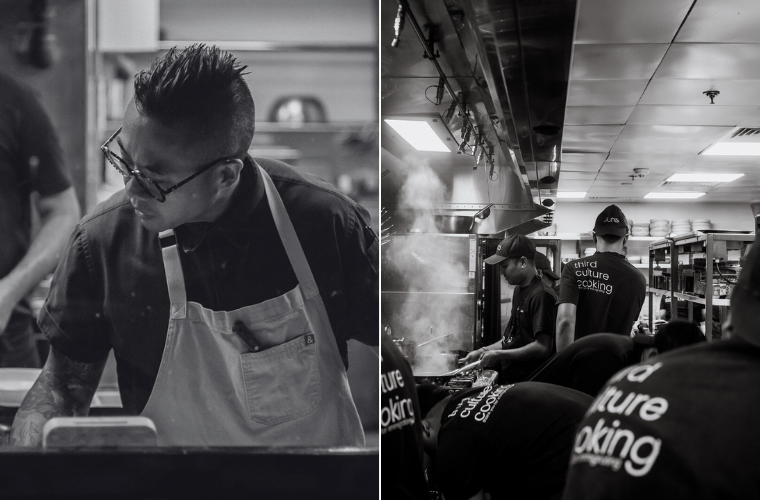
In Dubai’s F&B scene that’s teeming with dining concepts, Jun’s holds its own by staying true to Chef Kelvin Cheung’s third-culture cooking, showcasing a masterful fusion of distinct cultural flavours.
Jun’s isn’t just another restaurant in Downtown Dubai offering some of the city’s best Burj Khalifa views. It’s where Chef Kelvin serves up food that tells his life story full of flavours – and you’ll taste them all at Jun’s. Kelvin Cheung, the owner and creative force behind the award-winning restaurant, is known for his innovative take on third-culture cooking, and Jun’s serves as the playground for culinary innovation.
The menu showcases a lavish spread of dishes that feel familiar but come with a twist, where comforting Asian flavours are given an elevated spin and modern interpretations through his finesse skills. The dishes are inspired by Cheung’s childhood and life stories – a reflection of his culinary journey that has him across the globe, from Chicago, India, to Belgium, and now, the UAE.
Take the rainbow heirloom carrots, charred over olive wood and served with smoked labneh and candied walnuts. It’s a dish that reminds Cheung of his childhood but lands on the table as something completely fresh. There’s also the sourdough baked in-house, burrata paired with mapo sauce, and plates that nod to the North American Asian food he grew up with.
Beyond the food, the service was also impeccable. The staff constantly checks on guests and asks if the dishes are up to par, and Chef Kelvin occasionally graces the table, sharing his techniques, knowledge, and personal anecdotes, making the dining experience warm and personal.
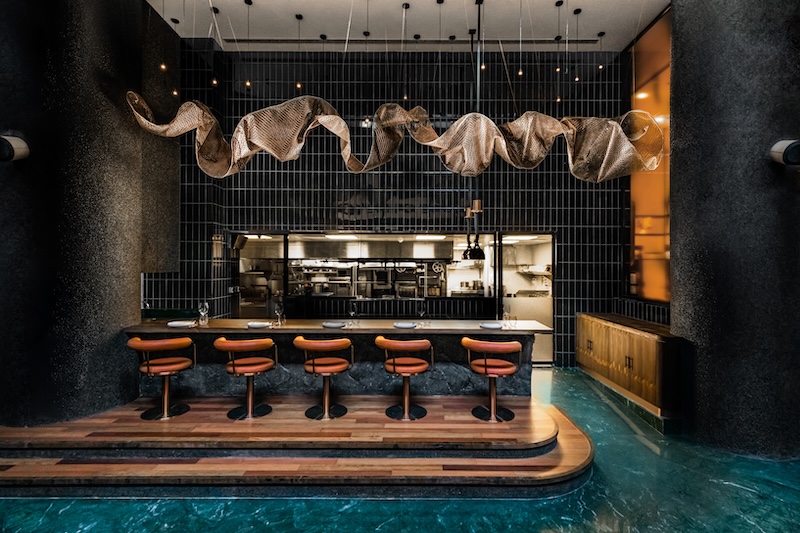
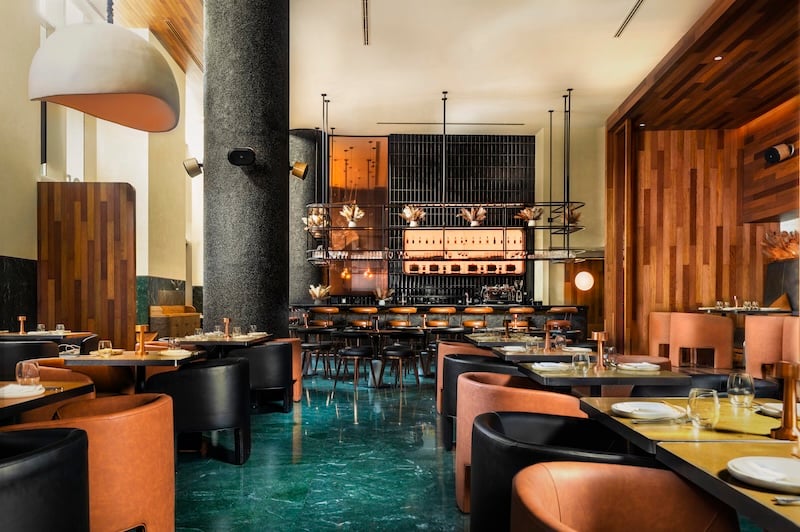
The setting of the cosy semi-fine dining concept is just as thoughtful. Green marble floors, rice bowl-shaped pendant lights, and pebble-dash columns create a space that feels both sleek and relaxed, setting the scene for a leisurely lunch or dinner with family, friends, and loved ones.
You’ve coined the term and become synonymous with “third-culture cooking”. How do you define that philosophy, and how does it come alive at Jun’s?
Third culture is being caught between cultures. I’m celebrating a unique perspective and creativity that comes from straddling multiple cultural worlds. The food at Jun’s is my life on a plate. I do not worry about maintaining the authenticity of a dish. For example, every family has their own version of a particular area’s authentic dish. Who are we to judge which is more authentic? I think that keeping boundaries on food, or people, for that matter, does a disservice.
Many of us are Third Culture Kids who grew up differently from the majority of our peers, whether in their origin country or their new home country. While we now refer to our food as “Fun, Inventive Cooking Without Borders”, it is still North American Asian at heart.
Growing up in North America to immigrant parents, I lived in a dual world. There wasn’t much diversity at my school, and I was bullied mercilessly for my six-component “smelly” lunches while my peers were chowing down on bologna and peanut butter jellies. Outside of school, I sought refuge in the Asian communities that lived around Chinatown.
During the menu development process, I tried to label my food, and the only thing that felt right was that it wasn’t one of the existing labels, until I leaned into the food I grew up on. North American Asian is a distinct cuisine. The food incorporates easier-to-source ingredients and doesn’t limit itself to tradition, instead exploring different combinations.
Tell us about the creative process behind the menu conceptualization at Jun’s. To you, what comes first – the ingredient, the memory, or the final product?
The first time I visited Dubai in 2016 was on a market analysis trip. Five years later, I moved to the UAE in May 2021 after watching the hospitality business crumble in every corner of the world. When Neha Anand of Three Layer Hospitality and King’s Group Ventures reached out to me about moving to Dubai to open the restaurant of our dreams, the city was already on my radar. Fellow chefs in the industry had vouched for the relative strength of hospitality here, praised the authorities’ incredible handling of COVID, and encouraged me to explore a move. To say the least, it turned out to be an excellent decision. Dubai has so much to offer, not just as a chef but also as a father. Neha and I are building our dreams together at Jun’s, our first home in Dubai.
As the cooking is profoundly personal, the name comes from my son’s Chinese name: Jun Jun Wai. It just so happens that Neha’s son is Arjun, so the name represents both of our children, as well as both of our priorities (our family and our work) perfectly.
You’ve lived in multiple countries: Canada, Chicago, India, and Belgium. How much of your own cultural upbringing and journey as a chef do we see plated at Jun’s?
Throughout history, immigrants have always been incredible at improvisation, adaptation, and invention in the kitchen. This is why I think you’re seeing such a big rise in Third Culture Chefs. We’re all cooking what we know, the adapted version of culture using ingredients and techniques that were possible in our new home countries, which were often a world away from our own culture. Growing up in North America to Cantonese-speaking parents who had only recently moved to Toronto, I lived in a dual world. There wasn’t much diversity at my school, and I was bullied mercilessly for my six-component “smelly” lunches while my peers were chowing down on bologna and peanut butter jellies. Outside of school, I sought refuge in the Asian communities that lived around Chinatown.
My menu is an ode to the North American Asian food I grew up with, served in a modern format. I’ve reimagined my favourite dishes and flavours from across the entire continent and tell my story through food with each dish. You’ll see very traditional Chinese flavour combinations using French techniques I learned during my time in Belgium, and just the opposite, too. You’ll find dishes traditionally considered European, like burrata or tortellini, paired with unexpected flavours such as mapo. And just in case the food doesn’t fully convey the message, our team members take storytelling seriously, guiding guests through the Jun’s experience.
View this post on Instagram
Jun’s is as much about atmosphere as it is about food. What was the vision behind the interiors, and how do they reflect the culinary narrative you’re telling?
The brief for the restaurant was bold, modern, simple, and approachable. We wanted a sleek contemporary venue with slightly rough edges. Green Indian marble flooring represents the Indian connection for both Neha and I, while the jade colour holds a very prominent place in Chinese culture, symbolising good fortune. Rice bowl-inspired, organically shaped oversized pendant lamps hang from the vast ceiling cavern. Each column throughout Jun’s is covered in pebble dash. The rough cast is a sustainable material designed to reconnect the design to the environment and remind both our team and our diners of our commitment to focusing on sustainability whenever possible.
In your eyes, what makes Dubai the perfect canvas for your culinary style?
The diversity of the city creates an incredible opportunity to offer a wide range of flavours and textures, and to truly push boundaries. There is something for everyone in Dubai, and there is also an audience for every type of restaurant. Considering the food scene here offers top-quality cuisine and service in every corner of the city, it keeps my team and me motivated to deliver excellence with every experience. There are very few places in the world that cater to such a diverse set of people. With that in mind, when creating a menu, I have to ensure there are options for everyone, allowing for an inclusive dining experience.
The most important aspect of Jun’s menu is to continue creating and innovating new, fun, seasonal dishes that are also inclusive, making the Jun’s experience for everyone. Every menu offers more than 50 per cent vegetarian options while being sensitive and adaptable to allergens such as gluten and to dietary preferences such as vegan. Balancing a menu to be as creative as possible while also keeping in mind affordability and approachability is a skill I have practised for years, and it is what will keep us in business.
The dining scene in Dubai is increasingly global and brimming with experimentation. How does Jun’s set itself apart?
Innovation, consistency, and quality. Our hospitality is also a huge driver. The dishes are profoundly personal, and we try to personalise wherever possible, from fortune cookie messages to altering dishes to fit customers’ dietary requirements.
People connect to our food through our storytelling, and I think that is a key differentiator for Jun’s. From a technical perspective, we have finally had the opportunity during the off-season to work on our new tasting menu and to build our fermentation lab. Here we have created our own miso, which we’ve aged for eight months, and our house Parmesan garam, which we’ve aged for nine months. We have also developed our own vinegars, soy sauces, and kombuchas. These additions to our repertoire have been incredibly well received, as they add another dimension and complexity to our flavours and techniques. It’s also just really cool because we can transform kitchen by-products into something not only usable but absolutely delicious on the menu.
You’ve cooked around the world. What has Dubai taught you that no other city has?
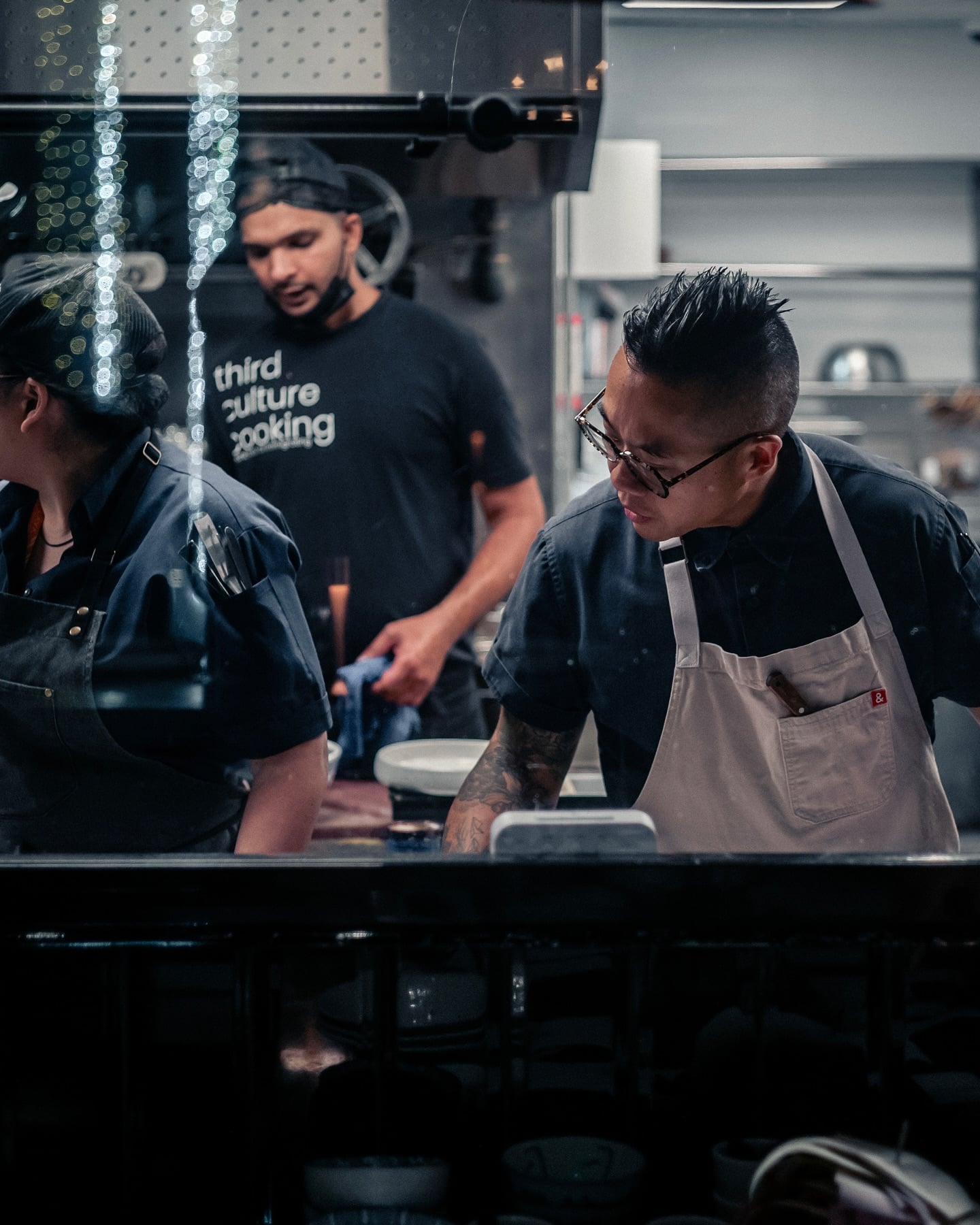
Dubai has taught me that in a market moving this fast, you can’t cook only for yourself. You have to cook for the guests in front of you, understand what excites them, and still find a way to layer in your own ethos and identity. It’s a dance, adapting to the city’s rhythm while still staying true to your story.
To you, which dish from Jun’s menu is your favourite and perfectly captures your idea of third-culture cooking? What’s the story behind it?
Rainbow heirloom baby carrots, smoked labneh, soy honey butter, candied walnuts, slow fermented sourdough we bake in-house.
The carrot dish holds a special place in my heart always because it’s a flavour that I remember distinctly from my childhood. Like every dish at Jun’s, the Rainbow Heirloom Carrots has a wonderful story told while it’s being served that really sticks with guests. It is also a great example of my cooking today and Jun’s Third Culture cooking because it captures that nostalgia while still having third culture flavours.
Upon immigrating to North America, my mother fell in love with bagels topped with smoked salmon and cream cheese. This core memory is a big part of my story growing up as a first-generation Canadian in a very Chinese household that generally only served rice. It was the first time we had ever seen North American ingredients suddenly stocked in our kitchen.
I’ve recreated the same smoky flavour in a vegetarian form with charred Rainbow Heirloom Baby Carrots served over smoked labneh and topped with candied walnuts – an iconic garnish in American Chinese Walnut Shrimp – as an ode to my Chinese heritage, served with house-baked sourdough.
We char the heirloom carrots over olive wood, and serve it with candied walnuts (a technique I learned from my fathers Walnut Shrimp), soy honey buttter and over local labneh which we hang for 36 hours and cold smoke with mesquite and hickory all served with our freshly baked sourdough from starter that I first began feeding as soon as I moved to Dubai as I knew slow fermentation is a process I wanted to bring into my dishes.
When you step into Jun’s as a guest, what do you hope to feel?
The Jun’s vision was to create a space that is the go-to place for every occasion, where you know you are getting an amazing experience with delicious food and delicious drink. Jun’s should be the place that you go when you are hungry, the place where you go for a drink and a snack, the place for date night, and even the place for occasions and celebrations. We want Jun’s to bring you joy, and that’s been our focal point since day one.
Which part of the creative process excites you most – developing a new flavour, perfecting the technique, or watching the diner’s reaction?
Watching the diner’s reactions.
What’s next for Chef Kelvin Cheung?
My long-term goals for the restaurant and my career are quite simple: to keep cooking the food I truly enjoy and to see the restaurant full. For me, that is the truest measure of success. I want to continue honing my technique, refining my skills, and creating dishes that I love to eat, while sharing that same joy with every guest who walks through our doors. My focus is always on doing my best and cooking at the highest level I can.
That said, we are constantly pushing ourselves as a team, and there may just be a small project very close to my heart in the works, something I hope everyone will be able to enjoy very soon.
– For more on luxury lifestyle, news, fashion and beauty follow Emirates Woman on Facebook and Instagram
Images: Supplied & Instagram: @junsdubai


