



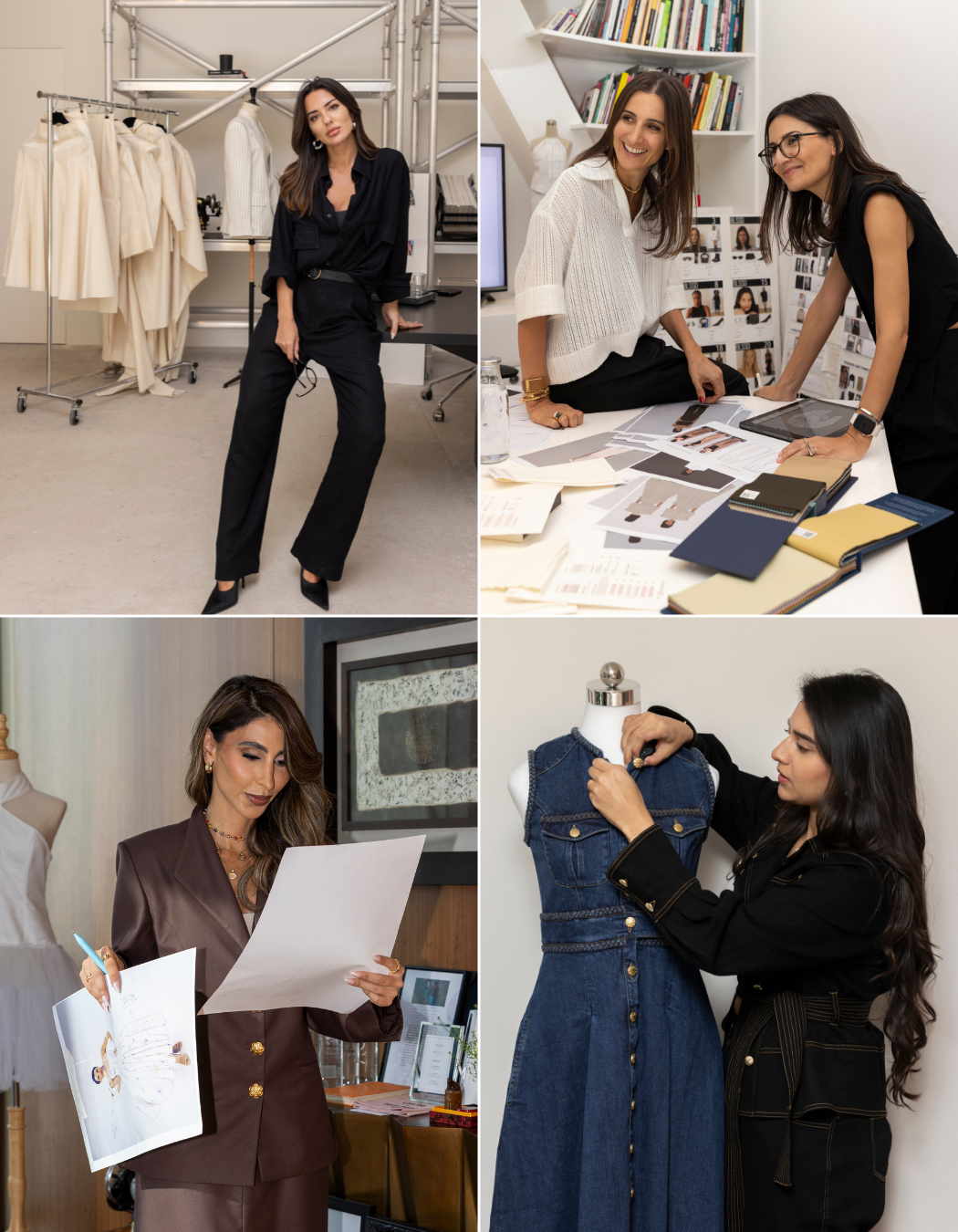
Emirates Woman steps into the creative workspaces of four inspiring Dubai-based fashion brands to see where their founders ideate with abandon and how the UAE has supported their dreams.
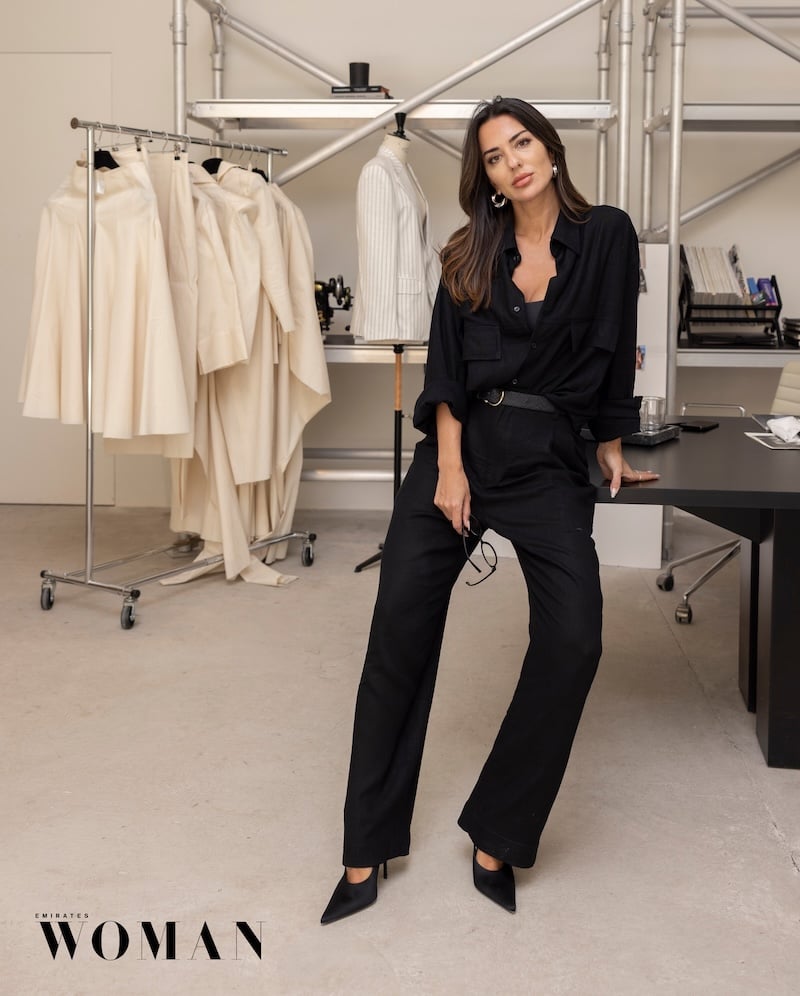
LAMA JOUNI
Founder and Creative Director of Lama Jouni
How have you evolved as a designer since you started the brand, and what have you learned about yourself?
Over the years, I’ve realised that building a fashion brand is never linear. The industry moves in waves; it’s up and down, unpredictable, and constantly shifting. That pushed me to evolve not just creatively, but personally. I learned that reinvention is essential, but it has to come from a place that feels true to who I am and the woman I design for. From the beginning, my intention was clear: to offer women thoughtful wardrobe solutions at an accessible price point, without compromising on aesthetic or purpose. That vision has never changed; it has only become clearer and more refined. I’ve learned that I’m incredibly persistent. When I believe in something, whether it’s my brand, my message, or supporting the women who wear my pieces, I don’t stop until I achieve it. I know what I want, and I go after it with clarity and conviction. This journey has shown me that resilience is one of my strongest qualities, and it continues to guide me in every chapter of my work.
What sets the UAE apart, and how has it shaped your path as a designer?
What sets the UAE apart is the sense of possibility it offers. I grew up in different parts of the world: Europe, the Gulf, and Lebanon, but the UAE is the only place where I truly felt a sense of freedom, acceptance, and reciprocity. I always say that this country gives back. Whatever you invest here creatively, intellectually, financially, or socially, you feel it returns to you in some way. For me as a designer, the UAE created a safe and supportive environment that allowed me to grow into my potential. Everything is facilitated in a way that encourages you to build, to take risks, and to evolve. That stability, openness, and support have been fundamental in helping me shape my path and flourish in my work.
What has been the most pivotal moment of your career so far?
One of the most defining moments of my career has been building my brand over the past decade and growing alongside other designers in the region. Through that journey, I learned how persistent I truly am, and I also saw firsthand the challenges that many young brands face in the early stages. I’ve always felt a responsibility to make that path easier for others. Launching Outline with my business partner, Ruby Kreidieh, was a turning point. It wasn’t just a milestone for my own brand – it was a step toward strengthening the entire local fashion ecosystem. Outline was created to support designers, to give them the tools and guidance many of us didn’t have when we started. I’m naturally someone who gives back, and contributing to the industry in a meaningful way aligns deeply with my purpose. Knowing that our work at Outline helps elevate the community makes this chapter one of the most important in my career.
What does your workspace mean to you, and what in it inspires you creatively?
The most important element in my creative space is conversation. Meaningful exchanges with the people around me open my mind, spark ideas, and push me to think in unconventional ways. I’m not a conventional person by nature, and I love being surrounded by people who challenge my mindset – that’s where a lot of my inspiration comes from. Music is another constant in my workspace. I listen to it throughout the day, and the feeling I get from a song often guides me toward the woman I want to design for. Movies and the books I read play a big role too. I’m a very dreamy person, and these elements amplify that side of me, helping me slip into a more imaginative, creative state. All these influences, conversations, music, films, and books shape my world and keep my creativity flowing.
What’s your advice for upcoming designers?
My biggest advice is to stay deeply focused on what you want to achieve. Launching a good product isn’t enough. You need a strong vision, a purpose, and a clear understanding of why your brand should exist. Fashion is not a field for quick returns. It’s a long journey, a beautiful one, but one that requires patience, resilience, and self-awareness. You have to be ready for the highs and the lows, the failures, the small victories, the disappointments. You need a thick skin to accept criticism and the courage to be vulnerable. Putting your creativity out into the world is one of the most vulnerable acts, and how people respond to it can be challenging. If you’re not willing to embrace that vulnerability and grow through it, the journey will feel overwhelming. But if you are, it will shape you into a stronger, more grounded creative.
What’s next for Lama Jouni?
The next chapter is all about staying true to the aesthetic and purpose I’ve built from the beginning, while expanding the range of wardrobe solutions we offer. I want to create more pieces that women genuinely identify with and love, essentials that become part of their everyday lives. We’re growing the essentials line beyond suiting and dresses and introducing new product categories that still carry the same minimal, thoughtful DNA. Hopefully, a men’s line will follow soon. It’s an exciting evolution but still rooted in the same intention: to create pieces that feel effortless, relevant, and timeless.
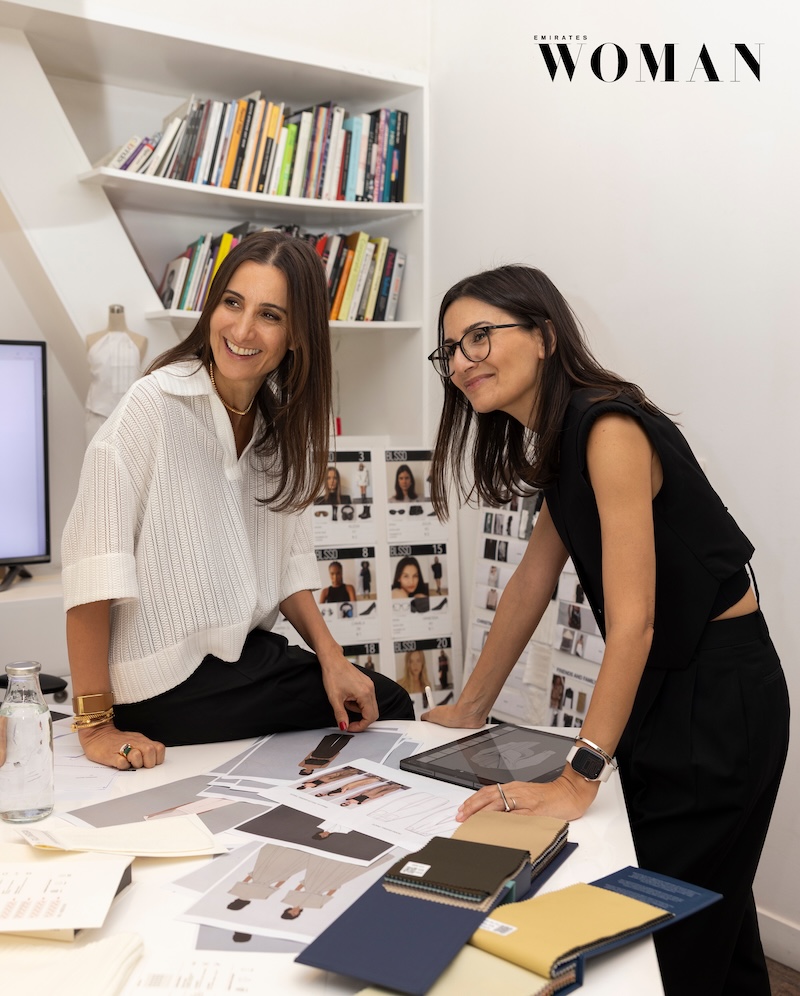
LAMA RIACHI AND LYS RIACHI
Co-Founders of BLSSD
How have you evolved as designers since you started the brand, and what have you learned about yourselves?
LAMA: I design with a different kind of clarity now. The ideas are still instinctive, but the thinking behind them is more layered. Years of learning construction, materials, and production have changed how I build a collection. It made me realise I’m far more patient, precise, and curious than I ever thought.
LYS: In the beginning, I obsessed over single pieces. Now I see the whole arc of a collection in one sweep. My instincts are sharper and I trust them more. I’ve learned I work best when I don’t overthink the first spark.
What sets the UAE apart, and how has it shaped your path as designers?
LAMA: Dubai moves fast, which forces you to move smarter. The market is incredibly diverse, so you learn to design with a wider lens. That mix of pace and variety has pushed me to stay agile and always listen more closely.
LYS: The bar gets higher every year. So many global brands are here now. Standing out demands constant reinvention, which has shaped how I think about design and the business behind it. It keeps you hungry.
What has been the most pivotal moment of your career so far?
LAMA: Our first runway show. It was the moment the brand stepped into its own skin. Opening our store in the Mall of the Emirates was another shift, a quiet signal that BLSSD belonged on a bigger stage.
LYS: Joining the Dubai Fashion Week Designers Committee changed things. It put us in a new circle and pushed us to grow. Getting onto Ounass was a marker that the region was ready for what we were building.
What does your workspace mean to you, and what in it inspires you creatively?
LAMA: Being in Alserkal gives us a constant stream of art and ideas. Our showroom and atelier sit right next to our design consultancy’s studio upstairs, so the space has this steady hum of creative energy. It reminds me that fashion sits at the centre of a much larger world.
LYS: The studio is alive. Clothes, fittings, sketches, people coming in and out. It gives you a real sense of the craft, not just the concept. I get inspired by movement, by seeing things get made in real time.
What’s your advice for upcoming designers?
LAMA: Learn your craft. Know how things are made. Production isn’t the boring part, it’s the backbone. If you ignore it, your ideas won’t survive the real world. And don’t be precious. Get your hands dirty.
LYS: Know your numbers. Creativity without a grasp of cost is a hobby. If you want a brand, not a passion project, learn the business.
What’s next for BLSSD?
LAMA: The aesthetic keeps evolving. Still experimental, but more refined. More luxury, less street. Accessories are where we’re heading next, and that excites me.
LYS: We’re exploring growth, but we’re selective. Expansion only works if it feels aligned and sustainable. We’re looking at new markets and categories, but always with intention.
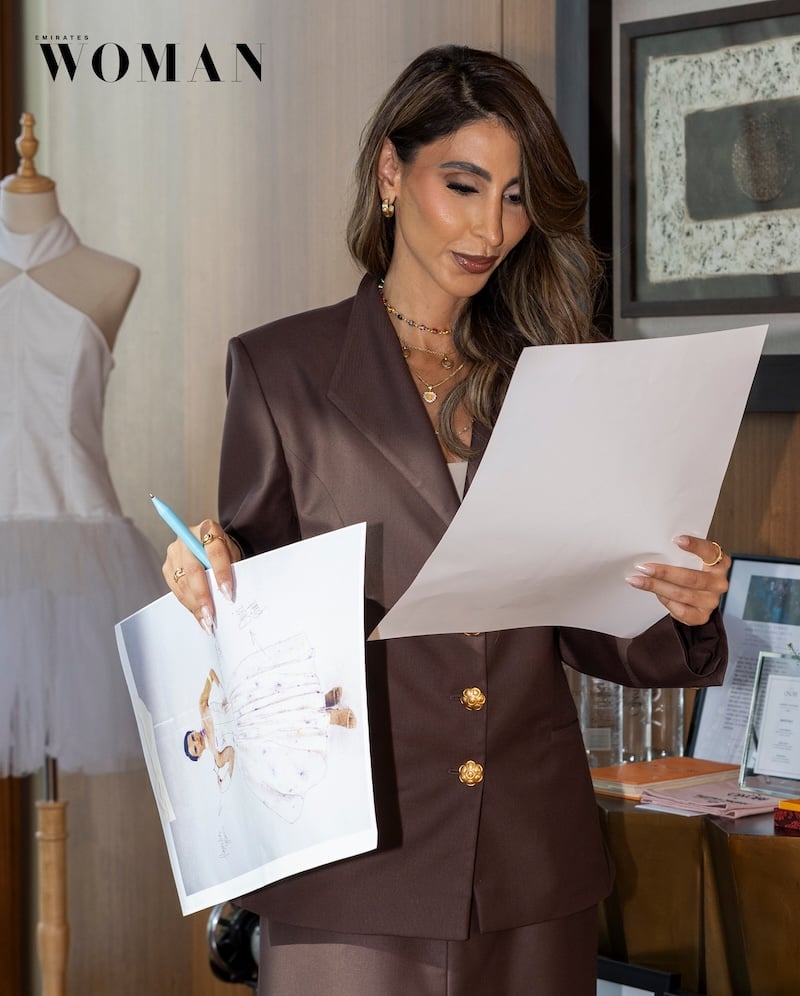
SHARIFA ALHASHEMI
Founder and CEO of ONORI
How have you evolved as a designer since you started the brand?
When I first started ONORI, it was all about creativity, expression, and having fun. I wanted to be bold, artistic, and free with my designs. I wasn’t thinking much about being commercial or structured; it was purely driven by passion and emotion. But one thing that has always been consistent from the very beginning is my commitment to quality and craftsmanship. That never changed. As the brand grew, I began to understand the importance of balance, balancing creativity with wearability, artistry with business. In the beginning, I was thinking globally, wanting ONORI to reach international markets right away. But over time, I realised that true growth starts locally and regionally, understanding your clients, studying your market, and building strong roots before expanding. In my first year, I was eager to do everything fast, design, produce, and sell. Now I’ve learned to slow down, observe, and be more intentional. That shift has made me not only a better designer but also a better businesswoman.
What do you think sets the UAE apart, and how has it paved the way for you as a designer?
The UAE is truly a place of opportunity and inspiration. It attracts people from all over the world. What sets it apart is the way it combines vision, diversity, and support. It’s not just a financial hub, but also a growing fashion and creative hub, where ideas and cultures from every corner of the world come together. As a designer, I feel incredibly lucky to be based here. The government’s support for entrepreneurs and creatives is remarkable; it’s not limited to locals or women, but open to anyone with ambition and drive. Starting a business here is accessible, secure, and filled with opportunities. The exposure you get just by being in the UAE is massive. It’s one of the most visited countries in the world, and that automatically connects you to a global audience. Even the reason I was able to study abroad and gain the experience that shaped me was thanks to the support of my country. The UAE truly empowers us, as individuals, as women, and as creators to dream bigger, build confidently, and share our work with the world.
What has been the most pivotal moment of your career so far?
There have been so many unforgettable moments throughout my journey with ONORI. From staying up until 3:00 am with my sister, my mother, and the ONORI girls working on our first collection, to receiving my very first order, launching the website, and seeing everything come to life. Each milestone felt deeply personal: my first meeting with buyers I had always dreamed of working with, seeing ONORI on the platforms I once admired, or the moment one of my favourite celebrities wore my designs for the first time. I’ll never forget being recognised as one of the Woman of the Year by Emirates Woman – standing among incredible, inspiring women was truly humbling. One of the most emotional moments was my first pop-up event, when both my parents came and proudly took a photo with the ONORI billboard – it was a full-circle moment. And, of course, being recognised by Fashion Trust Arabia within just two years of launching ONORI is something I will always cherish. And now taking ONORI to Qatar and being nominated for Fashion Trust Arabia in the Eveningwear category feels huge. I don’t think I’ve even fully processed it yet. Every one of these moments reminds me that passion, persistence, and faith truly build dreams and I’m endlessly grateful for each step of this journey.
What does your workspace mean to you – what are the elements that inspire you to be creative?
My workspace is a true reflection of ONORI and everything that surrounds it. It’s filled with pieces that inspire me every day, frames I’ve collected from my travels, souvenirs and magazines that spark ideas, and even little dolls dressed in ONORI pieces. Seeing the brand come to life all around me keeps me motivated and connected to my vision. It’s a space where memories, inspiration, and design blend together. I love keeping it comfortable, homey, and safe. A space that feels truly mine, where I can think freely and create without limits. The colours, fabrics, puzzles, frames, and posters I’ve gathered over time tell a story of my journey. Each piece holds a memory or an idea that fuels my creativity.
What would be your advice for upcoming designers?
My advice would be to trust your instincts and be patient. It’s so easy to want quick results at the beginning, but real growth takes time, and every step, even the difficult ones, teaches you something valuable. Stay true to your vision, pay attention to every detail, and don’t be afraid to make mistakes; they often lead to your most important lessons. Be resilient, passionate, and focused. Don’t see criticism as something negative, learn from it and let it help you grow. Keep creating, stay inspired, and never stop learning. The journey of building something meaningful is full of challenges, but if you keep your heart in it and your eyes on your dream, everything eventually falls into place. And most importantly, it is never too late or too soon to start, just do it. Take that first step, no matter how uncertain it feels, because that’s where everything begins.
What are your next plans for ONORI?
For ONORI, the next steps are all about growth and expansion, reaching new audiences while staying true to our timeless, bold, and feminine identity. We’re scaling our production capabilities, launching in new global retail spaces, and creating more ways to connect directly with our customers. We also opened our own atelier, which is a major milestone for us. This allows us to produce everything locally and in-house, ensuring the highest quality and craftsmanship. Beyond ONORI, the atelier is becoming a space where we can support and produce for other local, regional, and international designers and brands, helping them bring their creativity and imagination to life. There are exciting pop-ups, collaborations, and international expansions in the works. My vision is to take ONORI global, but with a strong foundation here in the region. Before expanding further, I want to make sure we maintain a powerful local and regional presence and continue delivering excellence to our clients. The next big step is to build ONORI’s presence in Europe and the U.S., reaching a wider audience while maintaining the quality, craftsmanship, and identity that define the brand.
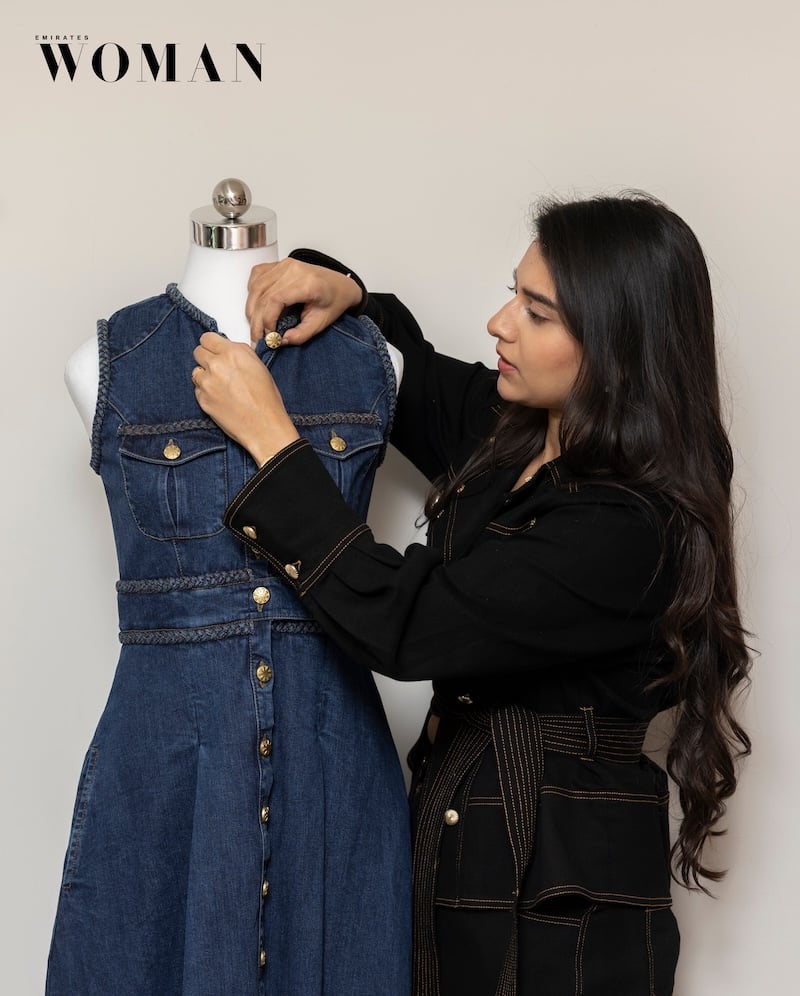
SHIVANI AGGARWAL
Founder of ANI
How have you evolved as a designer since you started the brand – what have you learned about yourself?
I feel like I was not the one who evolved myself. My team, full of creative genies, have helped me evolve. They said, “No, Shivani, we need you to enter the world of colour,” and they introduced and turned the brand (and my life) colourful. And now, there’s no looking back. From a black and white person, now my world is colourful because of the brand.
What do you think sets the UAE apart, and how has it paved the way for you as a designer?
I just feel that the women in the Middle East are so confident and fashionable – this confidence helps me in designing. It inspires me to go out and see what everyone is wearing – it’s just a breath of fresh air to be around here, looking at beautifully dressed people who are so confident. People say Paris is the fashion capital of the world – I don’t think that. When someone comes to Dubai, or even Riyadh, people are so fashionable, and I feel it has paved the way for me as a designer or as a brand owner to have that sense of confidence every day to put it in the clothes.
What has been the most pivotal moment of your career so far?
I was 20 or 21 when the brand was estab- lished so the pivotal moment for us was our first ever order from Saudi Arabia. Since then, there has been no looking back – it was a game changer for us that we had to expand our production. I still remember it was during Eid, and we were flooded with orders. One household discovered us through personal shoppers, who might have discovered us organically online. So now, we have an Arabic translator who helps us in sales. I’ve not put an effort into expanding anywhere internationally, because the organic growth we’ve got from here is amazing – people love it.
What does your workspace mean to you – what are the elements that inspire you to be creative?
There are two workspaces for me. Back home is more of a factory setup. So, what inspires me over there is my team, because I feel like we are a group of people who are just so creative, and the kind of conversations we have, I just love being with them. They are my daily inspiration to create anything. Over here in Dubai, since my office is in a lighting studio at LSI – the way they have done the lighting – it really inspires me to take the shapes and angles into my designs.
What would be your advice for upcoming designers?
Something that you think looks nice in terms of design might not fit the consumer. If you’re a designer and looking to sell, do not think that if you do not like that design, it won’t work – I have learned that. If you trust your team well enough to give them the independence and creativity, you as a designer will evolve.
What are your next plans for the brand?
Definitely expand more in the Middle East. There’s a lot of demand to try the clothes, so we are going to be moving on to standalone pop-ups, for everyone to actually see what the clothes look like, because sometimes when you see it in shoots or digitally, you can’t really translate the material, prints and colours. I really want people to know the brand and its essence by look and feel.
February’s – The Belonging Issue – Download Now
– For more on luxury lifestyle, news, fashion and beauty follow Emirates Woman on Facebook and Instagram
Photography: Mark Mathew


