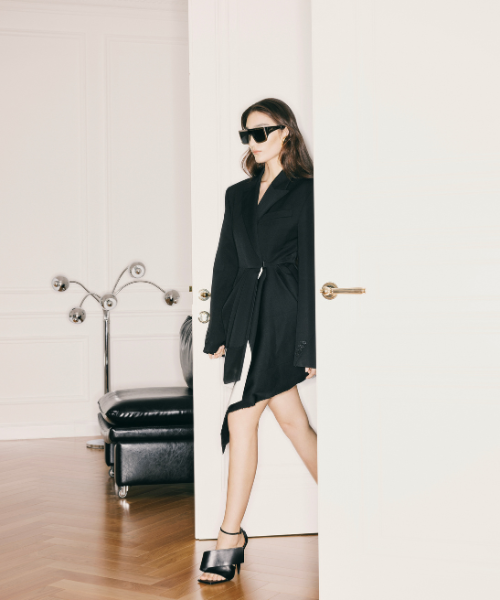



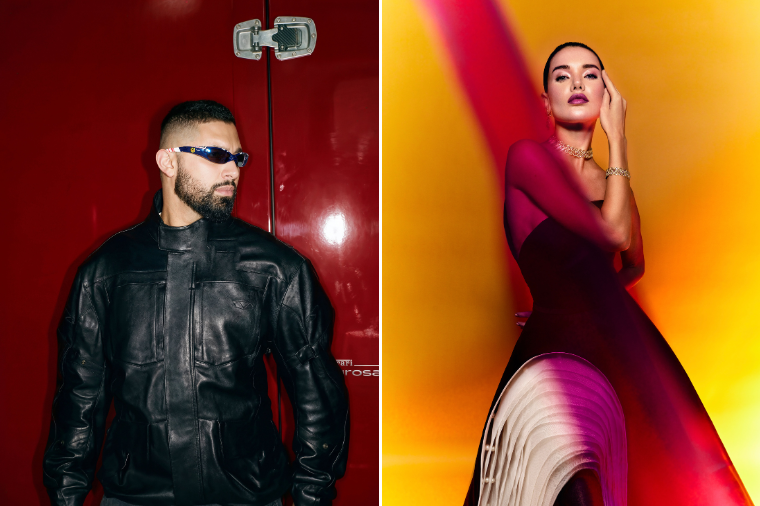
He’s shot high-profile campaigns for major brands. He’s created striking images for some of the most demanding fashion magazines in the world. He’s collaborated with elite models and creative teams. But every time photographer Amer Mohamad walks onto a location or into a photo studio, he still gets nervous. Why? “Because I care so much about my work and about getting every single shot right,” he shares. As a child growing up in Syria, Mohamad was obsessed with fashion magazines, which he kept hidden from his father. Mohamad knew he wanted to be a photographer as early as 12 years old. But remarkably, he never undertook formal photography education, instead opting to study architecture at Ivanovo State Polytechnic University in Russia. After graduating in 2018, he began a master’s in architecture, something that he says “helped me to build my vision of the kind of photographs I want to take.” Asked to describe that vision in a few words, Mohamad immediately responds with “bold,” before adding, “colorful, fun, edgy, spontaneous.” He laughs, “I don’t do minimalism.
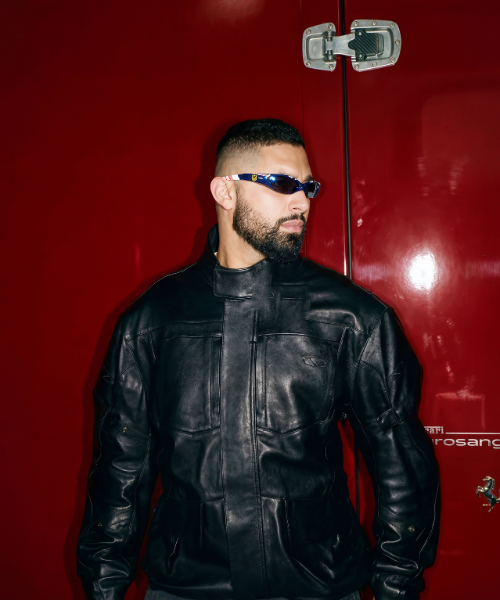
When his university architecture professor saw photos that Mohamad had taken of his fellow students in their dorm rooms, he suggested he pursue his dream. This show of faith ignited the budding photographer’s imagination and set him on his path. A turning point came when Mohamad exhibited some photographs in a month-long exhibition at a prominent Berlin gallery. Around this time, he also shot album covers for renowned singers and photographed music stars. Commissions from international magazines followed, as did advertising campaigns for MAC cosmetics and other brands across Russia. Mohamad moved from Russia to the UAE in early 2022, and his talent was quickly spotted by the likes of Piaget, Chaumet, Guerlain, NYX Cosmetics, APM Monaco, Hindash Cosmetics, and H&M Beauty, who hired him to shoot their campaigns.
TEAM PLAYER
Standing at six feet five, Mohamad tends to dominate a studio. But despite his height and charisma, he is never overbearing and always asks the creative team for ongoing feedback on the work they are producing. On set, he is known for his infectious laugh, his need for music that puts the room in the mood he is trying to capture with his images, and his ability to pivot on a dime when a shoot needs to adapt. Jade Chilton, who often works with Mohamad, is impressed not only by his technical know-how and creative vision but also by his intelligence and communication. “Amer speaks three languages fluently and really knows how to work the room,” she says. “He can be friends with the client, the model, and the fashion assistant and adapts to his surroundings.” Unlike some photographers, Mohamad isn’t afraid to roll up his sleeves. “If a light needs fixing, he’ll get involved,” Chilton adds. “I often see him sitting on the floor eating lunch with the crew.”
 SCENE BY SCENE
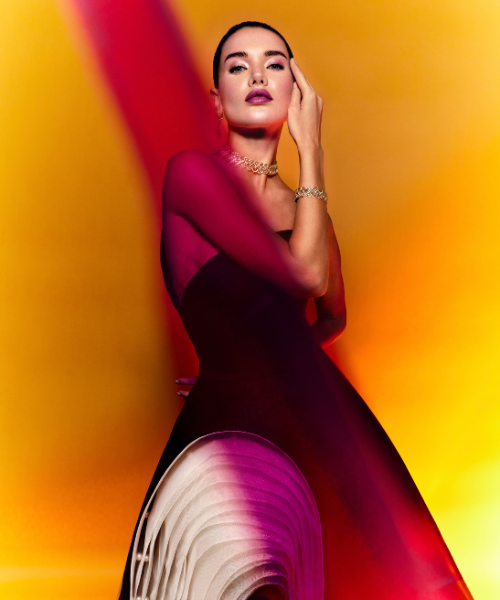
Before a shoot, Mohamad, 33, visualizes how it will play out, a process he describes as “a movie in my head.” Sketching set-ups on paper and showing them to the crew ensures the shoot has coherence. His time studying architecture inevitably impacts his method. When he walks onto a set, his architectural instincts kick in as he surveys the lines, light, and shadows of the space. “My background in architecture completely shaped how I hold a camera,” he explains. “I map out how the shoot and the clothes and the model are going to come together and bring the shoot to life.”
Of course, for any creative working today, the specter of AI looms large. Mohamad, though, is refreshingly upbeat about the new technology that many fear will replace human skill. “I’m not worried about the future of authentic photography,” he says. “I think that AI can help us cross bridges and create innovative images. I still believe that we can work together. AI can create a lot of images, but it doesn’t have a vision, it doesn’t understand light, it takes time, and it’s expensive. AI needs a human touch.”
For Mohamad, a larger concern surrounding AI is its environmental cost. A huge amount of water is required to cool servers and IT equipment in data centers. It’s thought that asking ChatGPT between 10 and 50 questions uses 500ml of water. The United Nations, meanwhile, estimates that AI-related water consumption could equal the basic annual domestic needs of 1.3 billion people by the end of the decade. AI systems are estimated to have consumed around 765 billion liters of water in 2025, an amount greater than the total global consumption of bottled water in that same year. “AI images are consuming the environment – that’s what scares me,” says Mohamad.
Currently on a short break to cleanse his mind and refresh his creativity—a habit he values greatly—Mohamad has a number of shoots on the horizon, which will demand every ounce of his skill and energy. Although dedicated to his work and insistent on high standards, Mohamad is able to see the lighter side of his job. “His sense of humor is quite silly,” shares Chilton. “Amer has this big laugh that shakes the studio, but, make no mistake, he takes his work really seriously.”