




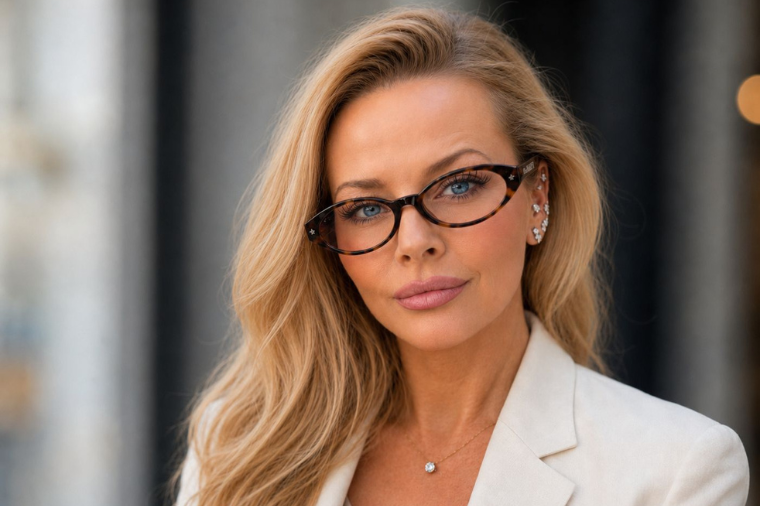
Francesca Alexandra was working in the UK healthcare sector when she first understood what it means to hold someone’s trust during a significant moment in their life — a lesson she did not anticipate carrying into real estate, but one that has shaped every client relationship since. Now Senior Director at Dubai Sotheby’s International Realty, with more than fifteen years in Dubai’s prime market behind her, Francesca built her career not by design but by chance, entering the industry after an unexpected opportunity presented itself following her relocation from the UK, and going on to advise high-net-worth and ultra-high-net-worth clients on some of the region’s most consequential transactions — among them, more than AED 500 million closed on Naïa Island in six weeks during a period of regional uncertainty. Here, she speaks about the values that have guided her, the clients who have trusted her, and what success actually looks like after all these years.
You began your career in the UK healthcare sector before finding your way into real estate after moving to Dubai. What was it about the industry that first pulled you in, and did it feel like a natural shift at the time?
Real estate was never part of the plan. The medical field was. After studying in the UK and being in a hospital environment, I genuinely believed that would be my lifelong career. It wasn’t just what I did — it was very much part of who I was. But when the trajectory of my life changed and I moved to Dubai, an opportunity in real estate presented itself almost unexpectedly, and I decided to take a chance on something completely different.
What I didn’t expect was how much I would love it. I was immediately drawn to the pace of the industry, the strategy behind every negotiation and, most importantly, the opportunity to work so closely with people. No two clients are the same, and no two days are ever alike. Looking back, I realise the transition wasn’t as unlikely as it first seemed. Although the industries are very different, the foundations are remarkably similar. Whether you’re in medicine or real estate, people place an enormous amount of trust in you. They rely on your judgement during significant moments in their lives, and that responsibility is something I’ve always taken seriously.
Real estate may have found me by chance, but the values I built from hospital life — empathy, trust and genuinely putting people first — have shaped the professional I’ve become.
You entered the market through leasing before moving into sales. How much did that ground-level experience shape the way you work with clients today?
It shaped everything.
Leasing teaches you the fundamentals of the market because you’re constantly matching people with homes, learning different communities and understanding why someone chooses one property over another. You meet people from every walk of life and learn to ask the right questions. That experience taught me that property is rarely just about bricks and mortar. Even at the highest end of the market, every purchase is personal.
I have now been working in real estate for over a decade, specialising in Dubai’s prime market and advising HNW and UHNW clients on some of the region’s most significant transactions. Although my career has evolved considerably since my early days in leasing, one thing has remained unchanged: I approach every client conversation with the same curiosity, openness and desire to truly understand what they need.
You’ve built a reputation for discretion and a relationship-led approach in a market that can be quite transactional. How did that philosophy develop, and why do you think it resonates particularly with ultra-high-net-worth clients?
I’ve never believed that this business is solely about selling. For me, it’s about understanding people first. My clients are often making decisions involving significant wealth, family planning or international relocation. Those conversations require trust long before they require negotiation.
Ultra-high-net-worth clients are incredibly experienced. They don’t need someone to sell them a property — they need someone who can provide honest advice, protect their privacy and tell them when something isn’t the right fit. I think clients appreciate authenticity.
If you consistently act in their best interests, relationships naturally become long-term rather than transactional. That philosophy reflects the ethos at Dubai Sotheby’s International Realty, where success is built on trusted advice, discretion and enduring client relationships rather than simply closing deals.
Your client base is largely international, many purchasing or relocating to Dubai for the first time. What does that first conversation typically look like, and how do you go about understanding what someone really needs beyond the property itself?
The first conversation is rarely about bedrooms or square footage. In my opinion, chemistry plays a huge role. I want to understand why they’re moving, how they live, whether they’re relocating with family, investing, or dividing their time between countries. Lifestyle, privacy, schools, travel patterns and long-term objectives all become part of the discussion.
Only once I understand those things do we start talking about property. Often what a client initially asks for isn’t actually what best suits them, so taking the time to understand the bigger picture is incredibly important.
You work across some of Dubai’s most prestigious addresses — Emirates Hills, Palm Jumeirah, Jumeirah Bay Island. Is there a particular neighbourhood you find yourself drawn to, either professionally or personally?
I honestly don’t have one favourite community because they all have something unique to offer. That’s one of the things I love most about Dubai’s prime market — each neighbourhood has its own character, and that variety makes it much easier to tailor recommendations to individual clients.
What I find myself drawn to most are communities where there is the opportunity to create something from the very beginning. I’ve always loved the idea of building a dream alongside a client and being involved in that journey, from selecting the perfect plot through to watching their vision come to fruition.
That’s why communities such as Jumeirah Bay Island, Emirates Hills, Dubai Hills and, of course, Naïa Island are where I feel most at home. There’s something incredibly rewarding about helping someone create a home that is completely bespoke to them, rather than simply assisting them to buy an existing property.
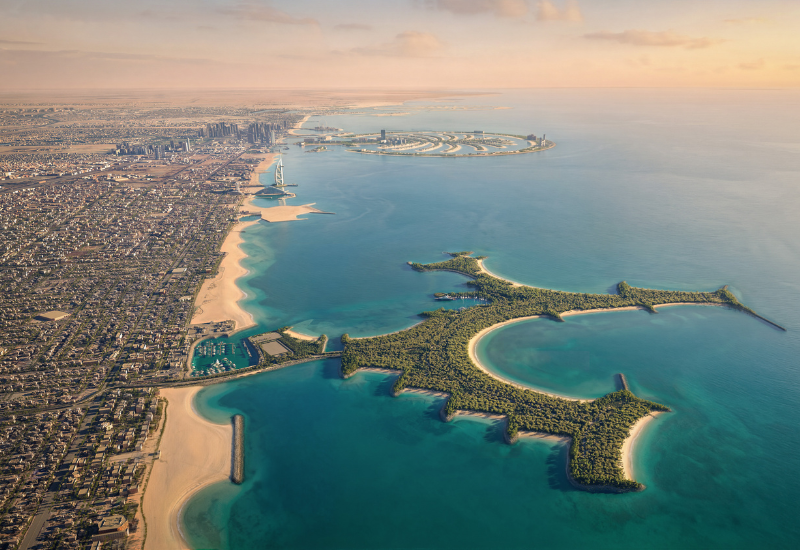
In just six weeks, you closed more than AED 500 million in landmark transactions on Naïa Island during a period of regional uncertainty. What did closing deals of that scale, in those conditions, teach you?
At the UHNW level, success is rarely about a single transaction; it is about building trust over time. These clients have access to vast opportunities all over the world, so understanding their objectives, respecting their privacy and consistently delivering accurate advice is critical. My focus has always been on cultivating long-term relationships, understanding each client’s unique requirements and providing a highly personalised level of service.
I was honoured to represent these sales and to help deliver new records for our city. While I do not often comment on individual transactions, given the current conversation surrounding Dubai and the market, I believe these sales offer an important and grounded perspective on where the sector stands today. They demonstrate not only the strength of our market, but also the trust that buyers place in a transparent, well-structured process.
There is no special secret to securing a deal like this. I really think it can be broken down to brutal honesty, resilience and consistently showing up for clients, even when transactions become complex or challenging. Being transparent, managing expectations and maintaining trust throughout the process are what ultimately lead to long-term success.
You advise on both off-plan and ready properties. How do you guide a client through that decision, especially when the two options speak to very different kinds of confidence in the market?
I don’t believe there’s a universal answer. It depends entirely on the client’s objectives. If someone is focused on capital appreciation and is comfortable with a longer investment horizon, off-plan can offer exceptional opportunities. If they’re looking for certainty, immediate enjoyment or rental income, ready property may be the better choice. My role isn’t to steer clients towards one or the other — it’s to explain the advantages and risks of both, so they can make an informed decision aligned with their goals.
Dubai’s super-prime market has changed considerably since you arrived in 2011. What’s the most significant shift you’ve witnessed in who is buying, and what they’re looking for?
The biggest change is that people are no longer simply buying property in Dubai — they’re building their lives here. Years ago, many buyers viewed Dubai as an investment destination or a second home. Today, we’re seeing entrepreneurs, business owners and families relocating permanently. Their priorities have evolved too. Lifestyle, privacy, wellness, education and long-term stability have become just as important as investment performance.
There’s a lot of conversation globally about Dubai as a destination for wealth relocation. From where you sit, what’s driving that beyond the obvious fiscal advantages?
Tax is certainly part of the conversation, but I don’t think it’s the deciding factor. People are choosing Dubai because it offers something increasingly valuable — stability. Combined with world-class infrastructure, safety, international connectivity, excellent healthcare and education, it provides an environment where families and businesses can genuinely thrive. For many clients, it’s about quality of life just as much as financial efficiency.
What does a client tend to underestimate about buying at this level in Dubai — something that surprises even the most experienced international buyers?
I think many buyers underestimate how nuanced the market is. Two homes on the same street can have vastly different long-term value because of orientation, privacy, architecture, future neighbouring developments or planning potential. The purchase price is only one part of the equation. Understanding those finer details is often what protects value over the long term.
You’ve spoken about expertise, preparation and authenticity as the foundations of long-term success. Of those three, which has been the hardest to hold onto as the market has grown and the pace has accelerated?
Preparation. The market moves incredibly quickly now, and clients expect immediate answers. Staying genuinely prepared means continuously learning, understanding every new development, monitoring market shifts and never becoming complacent. It’s demanding, but I also believe that’s what separates good advisers from great ones.
Authenticity has never been difficult for me — it’s something I’ve always believed is non-negotiable. You can keep learning, improve your expertise and adapt to the market, but remaining genuine is what builds trust, and trust is ultimately what creates lasting relationships.
More than fifteen years into a career that was never part of the original plan — what does success look like for you now, and has that definition changed?
It has changed considerably. When I first started in real estate, success was all about proving myself. It was about building a career, achieving milestones and demonstrating that I could compete in a highly demanding industry.
Today, my perspective is very different. Success isn’t simply measured by the size or number of transactions — it’s about making a meaningful impact; earning a reputation that clients trust, being invited back time and time again, and knowing that the relationships I’ve built are based on integrity rather than convenience. I also think success is about never standing still. Every client is different, every negotiation presents a new challenge, and every transaction teaches you something. That continuous learning is one of the reasons I still enjoy this career as much as I did when I first entered the industry.
If, years from now, people remember me not just for the deals I’ve done, but for the way I made them feel throughout the process and the value I brought beyond the transaction, I’d consider that the greatest success of all.
– For more on luxury lifestyle, news, fashion and beauty, follow Emirates Woman on Facebook and Instagram
Images: Supplied & Feature Image: Supplied


